What Happens in a Guided Literature Discussion?
Discover what happens during a guided literature discussion and how reading aloud, thoughtful questions, and shared conversation create meaningful connections.
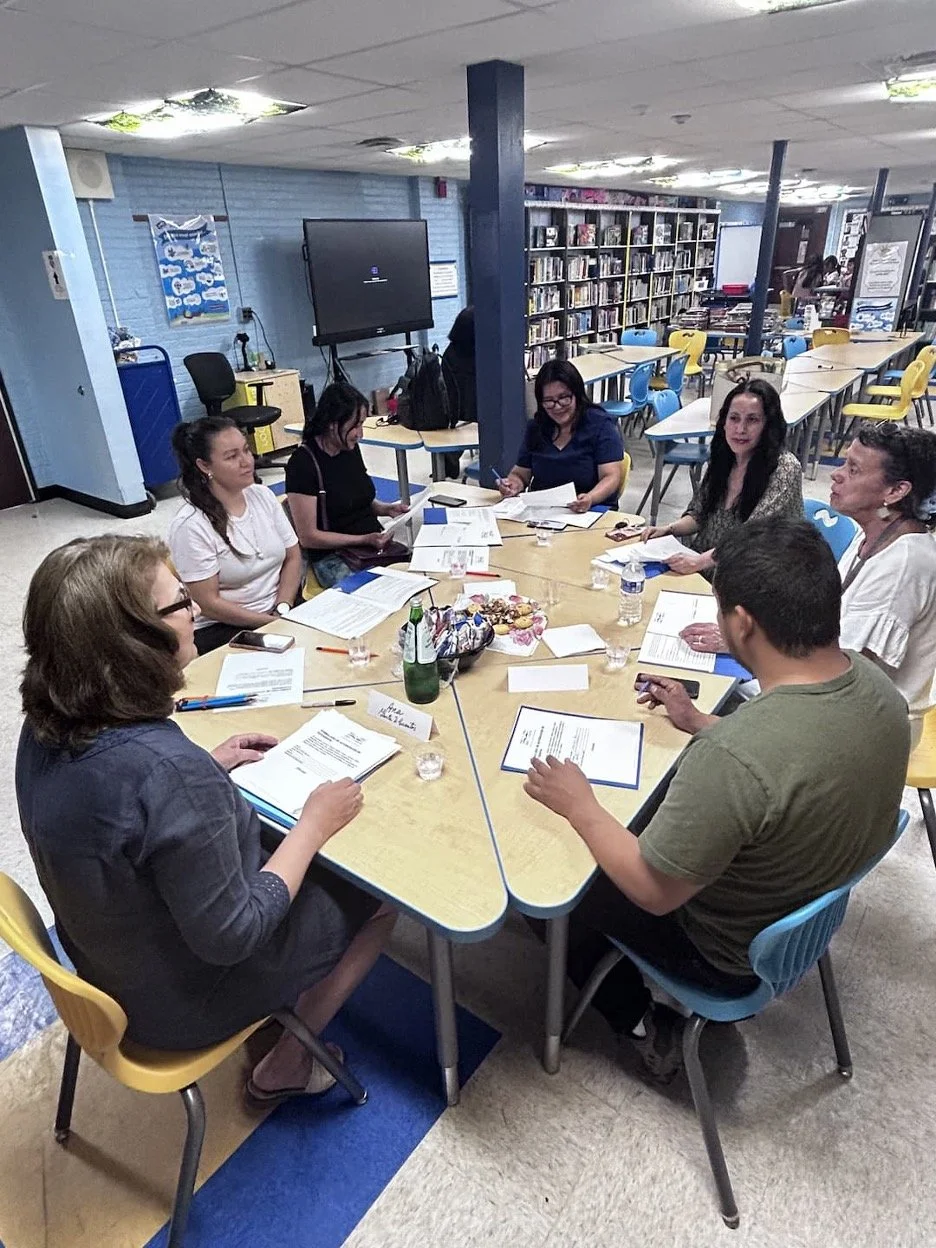
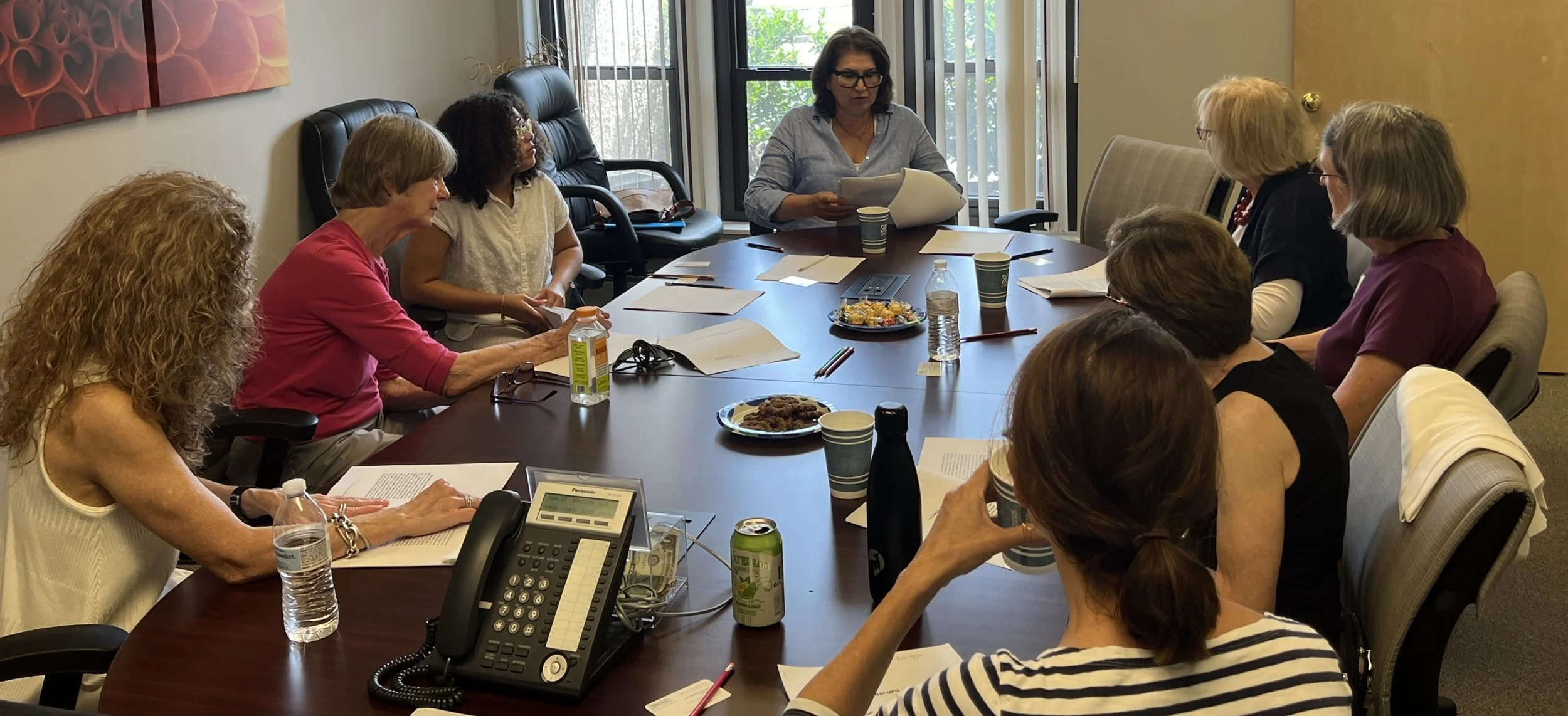
If you've never experienced a People & Stories/Gente y Cuentos discussion, you might picture a traditional book club. In reality, it's something quite different.
There is no assigned reading before the session. No one is expected to prepare in advance or have any literary background. Participants don't need to read aloud or come prepared with notes. Instead, everyone begins together by listening to a carefully selected short story or poem read aloud by a trained facilitator.
Listening Comes First
The session begins with the facilitator reading the literature aloud, pausing occasionally to invite participants to reflect on what they've heard.
Reading aloud allows everyone to experience the story together. Participants can focus on the characters, language, and ideas rather than on reading itself. Because everyone hears the story for the first time during the session, everyone begins on equal footing.
There Are No Right or Wrong Answers
One of the first things new participants notice is that this isn't an English class.
The goal is not to identify the "correct" interpretation or analyze the story from a literary perspective. Instead, participants are invited to share what they noticed, what surprised them, and how the story spoke to them.
A single passage may inspire many different responses. One participant may focus on a character's motivation while another notices the setting or the author's choice of language. These different perspectives enrich the conversation and often help participants see the story in new ways.
The Facilitator Guides the Conversation
The facilitator plays an important role—not by teaching the literature, but by guiding the discussion.
Through thoughtful, open-ended questions, the facilitator encourages participants to explore the text together. Everyone is invited to contribute, but no one is required to speak. The discussion moves at a comfortable pace, allowing ideas to develop naturally while ensuring that every voice is respected.
Literature Creates Common Ground
Because the discussion begins with a shared story, participants are able to explore ideas together before turning to their own experiences. Conversations often touch on themes such as family, friendship, courage, forgiveness, hope, change, or belonging.
People from different backgrounds frequently discover that they have more in common than they expected. Every discussion is different because every group brings its own experiences, perspectives, and questions to the literature.
The literature provides a common starting point; the discussion creates the connection.
Every Session Is Different
Although every People & Stories/Gente y Cuentos discussion follows the same signature, trademarked methodology, no two conversations are ever alike.
The same story can spark entirely different discussions depending on the participants, their experiences, and the ideas they bring to the table. That sense of discovery is one of the reasons so many participants look forward to each session.
For more than 50 years, People & Stories/Gente y Cuentos has brought this unique approach to senior communities, correctional facilities, recovery programs, affordable housing communities, libraries, and other community settings, creating welcoming spaces where literature becomes the beginning of meaningful conversation.
Related article: Why Read Literature Aloud? The Benefits of Shared Reading
The People & Stories Approach
The People & Stories Approach. Explore articles about reading literature aloud, guided discussion, the People & Stories signature methodology, and the ideas that have brought people together through literature for more than 50 years.
Why Read Literature Aloud?
The Benefits of Shared Reading
Reading is often thought of as a solitary activity—a quiet moment with a book and a comfortable chair. But when literature is read aloud and shared with others, something different happens. A story becomes more than words on a page; it becomes the beginning of a conversation.
For centuries, stories were shared by listening. Long before many people could read, they gathered to hear tales, poems, and histories passed from one generation to the next. Even today, hearing a story read aloud creates a unique experience that is both personal and communal.
Everyone Begins Together
When a story is read aloud, everyone starts at the same place. Participants hear the same words, discover the same characters, and experience the unfolding story together.
There is no pressure to prepare in advance, no expectation that anyone has read the text before, and no concern about reading speed or literary expertise. Everyone has an equal opportunity to listen, reflect, and participate.
Literature Becomes Accessible
Reading aloud removes many of the barriers that can keep people from enjoying literature.
Someone with vision loss, limited reading confidence, English as a second language, or changes in memory or concentration can participate fully simply by listening. Instead of focusing on decoding words, participants are free to imagine the story, notice details, and think about what it means to them.
This accessibility opens the door for people from many different backgrounds and life experiences to enjoy great literature together.
Every Voice Matters
The discussion that follows is just as important as the reading itself.
A single story may inspire many different interpretations. One participant notices a symbol. Another relates to a character's decision. Someone else hears humor where others hear sadness.
There is rarely one "correct" answer. Instead, participants discover how differently people experience the same story and how much they can learn by listening to one another.
The literature provides a common starting point, but the conversation is enriched by the perspectives each person brings.
Reading Aloud Encourages Reflection
In our busy lives, opportunities to slow down and think deeply are increasingly rare.
Listening to a story invites us to pay attention—to language, emotion, relationships, and ideas. The discussion encourages us to consider questions we might not ask ourselves when reading alone.
Often, participants leave with a new appreciation for the story, but also for the insights shared by others.
More Than Reading
Reading literature aloud is not simply about enjoying a good story. It is about creating opportunities for thoughtful discussion, meaningful connection, and shared discovery.
For more than 50 years, People & Stories/Gente y Cuentos has used this approach in senior communities, correctional facilities, recovery programs, affordable housing communities, libraries, and other community settings. Guided by our signature, trademarked methodology, participants discover that great literature is not something to master—it is something to experience together.
Whether someone is a lifelong reader or opening the door to literature for the first time, reading aloud reminds us that every story has the power to invite curiosity, encourage reflection, and bring people together.
Interested in learning more or bringing a program to your community? Explore our programs or contact us info@peopleandstories.org .
Why the People & Stories Approach Matters
The People & Stories Approach.
Learn why the People & Stories approach continues to matter and how great literature, guided discussion, and the humanities strengthen individuals and communities.
For more than 50 years, People & Stories/Gente y Cuentos has brought great literature and thoughtful discussion to communities where they can make a lasting difference. In a rapidly changing world, that work has become even more relevant.
Every week, somewhere in our communities, a group of people gathers around a table or in a circle to listen to a short story, and possibly a poem.
They come from different backgrounds. They bring different life experiences. Some are lifelong readers. Others haven't picked up a book in years. They may not agree on every idea the story raises, but for the next ninety minutes they share something increasingly rare: the opportunity to listen carefully, think deeply, and learn from one another.
That experience has been at the heart of People & Stories/Gente y Cuentos for more than five decades.
The Humanities Belong to Everyone
People & Stories/Gente y Cuentos was founded on Sarah Hirschman's belief that great literature should not be limited to classrooms, universities, or those who already see themselves as readers.
It belongs in senior communities, libraries, affordable housing communities, recovery programs, correctional facilities, and neighborhood gathering places. It belongs wherever people are willing to come together with curiosity, respect, and an openness to new ideas.
The humanities are not a luxury. They help us understand ourselves, appreciate different perspectives, and recognize our shared humanity.
Thoughtful Conversation Matters
In today's world, opportunities for meaningful conversation can be surprisingly difficult to find.
People & Stories offers something increasingly uncommon: a place where participants slow down, return to the author's words, listen carefully to one another, and discover that a single story can inspire many different interpretations.
No one is asked to defend an opinion.
No one is expected to arrive at the same conclusion.
Instead, participants practice something essential to healthy communities: respectful dialogue grounded in shared experience.
A Small Organization with a Lasting Impact
People & Stories/Gente y Cuentos is a small nonprofit with a long history and a broad reach.
Each year, trained coordinators bring our signature, trademarked methodology to older adults, people in recovery, individuals who are incarcerated, new immigrants, affordable housing communities, libraries, and many others who might not otherwise have access to humanities programs.
The settings are different.
The participants are different.
The stories—and the conversations they inspire—are different.
What remains constant is the belief that every person deserves the opportunity to experience great literature and to discover that their ideas have value.
Looking to the Future
For more than 50 years, generous individual donors, foundations, corporations, government agencies, and community partners have helped sustain this work.
Their support has made it possible for thousands of people to experience the joy of reading, reflecting, and connecting through literature.
As support for the humanities becomes increasingly uncertain, that partnership is more important than ever.
Every contribution helps ensure that the next group of participants will gather around a story, discover new perspectives, and leave with a deeper appreciation for both literature and one another.
That is the enduring value of the People & Stories approach.
And it is why this work deserves to continue.
Continue Exploring the People & Stories Approach
Why Read Literature Aloud? The Benefits of Shared Reading
What Happens in a Guided Literature Discussion?
Why Short Stories Work So Well for Group Discussion
How Literature Helps Reduce Social Isolation
Why Every People & Stories Discussion Begins with Great Literature